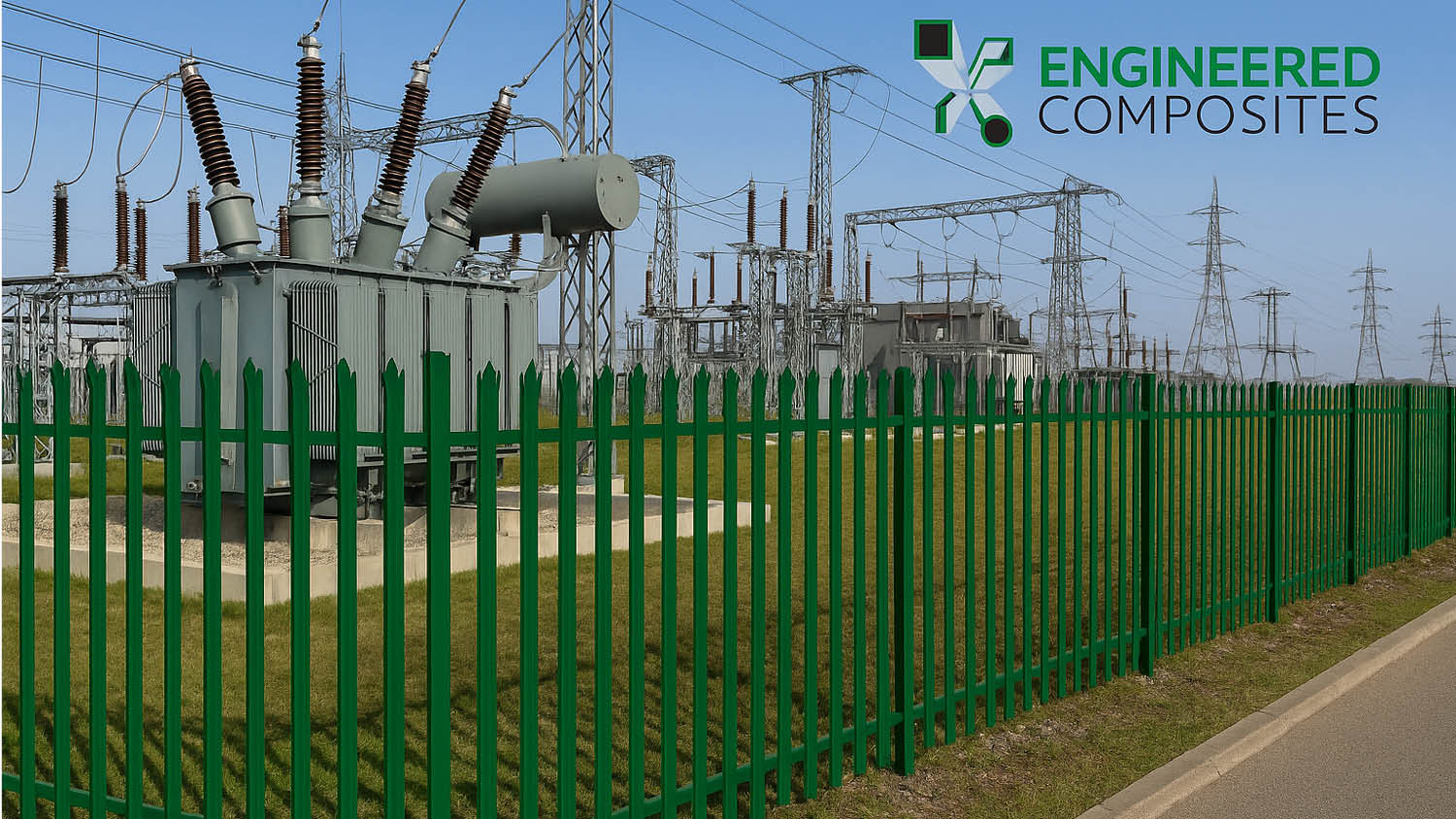
Utility operators across the UK are increasingly turning to Glass Reinforced Plastic (GRP) for platforms, walkways, handrails, and perimeter fencing in substations, pump stations, and treatment plants. The shift is being driven by a combination of safety performance, installation efficiency, and long-term cost savings that address some of the sector’s most persistent infrastructure challenges.
The utilities sector operates in some of the harshest environments in construction. From high-voltage electrical sites to chemically aggressive water treatment facilities, structural materials face constant exposure to moisture, pollutants, and in many cases corrosive substances. Traditional options such as steel and timber can meet performance requirements at the outset but often degrade over time. Steel is vulnerable to corrosion even when galvanised or coated, while timber requires regular treatment and is prone to rot, splitting, and warping.
GRP is chemically inert and will not rust, rot, or degrade when exposed to water, salt, or common treatment chemicals. This makes it particularly effective in pump stations and water treatment plants where constant moisture and chemical exposure can quickly undermine metal or wood structures. Its corrosion-proof nature also extends to coastal electrical substations and energy facilities, where airborne salt accelerates the breakdown of steel.
In live electrical environments such as substations and switchgear platforms, GRP’s inherent non-conductivity delivers a significant safety advantage. Steel structures in these settings require earthing systems to prevent dangerous voltage build-up, adding both capital cost and ongoing inspection requirements. GRP does not conduct electricity, allowing structures such as platforms, handrails, and fencing to be installed without earthing while still meeting safety compliance. This reduces installation complexity and removes a recurring maintenance obligation, which is particularly valuable for Distribution Network Operators (DNOs) managing large networks of dispersed assets.
Installation efficiency is another driver for adoption. Many utility sites are in remote or restricted locations where crane access is limited or costly. GRP is up to 75 percent lighter than steel and can often be carried manually into position in prefabricated sections. This avoids the need for heavy plant and enables faster installation, reducing the amount of time teams spend in live zones or hazardous environments. In a coastal pump station project, for example, GRP gratings and handrails were delivered pre-cut and installed within days, replacing corroded steel without the need for extended shutdowns.
Long-term cost performance is also influencing specifications. While GRP can be slightly more expensive to purchase initially than steel or timber, its low maintenance requirements and extended service life often result in significant savings over time. Steel installations in coastal or industrial environments require periodic recoating, corrosion repair, and eventual component replacement, all of which involve site downtime and labour costs. GRP typically requires only routine cleaning and visual inspection, allowing it to remain in service for 50 years or more without the need for major intervention. For utility operators, this predictable maintenance profile supports long-term budgeting and reduces unplanned outages.
Safety performance extends beyond electrical properties. GRP walkways, platforms, and stairs can be manufactured with integrated anti-slip surfaces that meet BS 7976 standards, maintaining grip in wet, oily, or otherwise contaminated conditions. Fire-retardant resin systems can achieve BS 476 Part 7 Class 2 fire spread performance where required, ensuring compliance without sacrificing other operational benefits.
The combination of corrosion resistance, non-conductivity, lightweight installation, and long service life is making GRP a material of choice in modern utility infrastructure projects. It is already proving its value in applications ranging from coastal substation fencing and elevated access platforms to pump station walkways and treatment plant safety barriers. In each case, the benefits extend beyond initial performance, supporting the operational reliability and cost efficiency that are essential for the utilities sector.
Further technical information and case study examples are available from Engineered Composites, the UK’s largest independent supplier of GRP products for industrial and infrastructure applications.