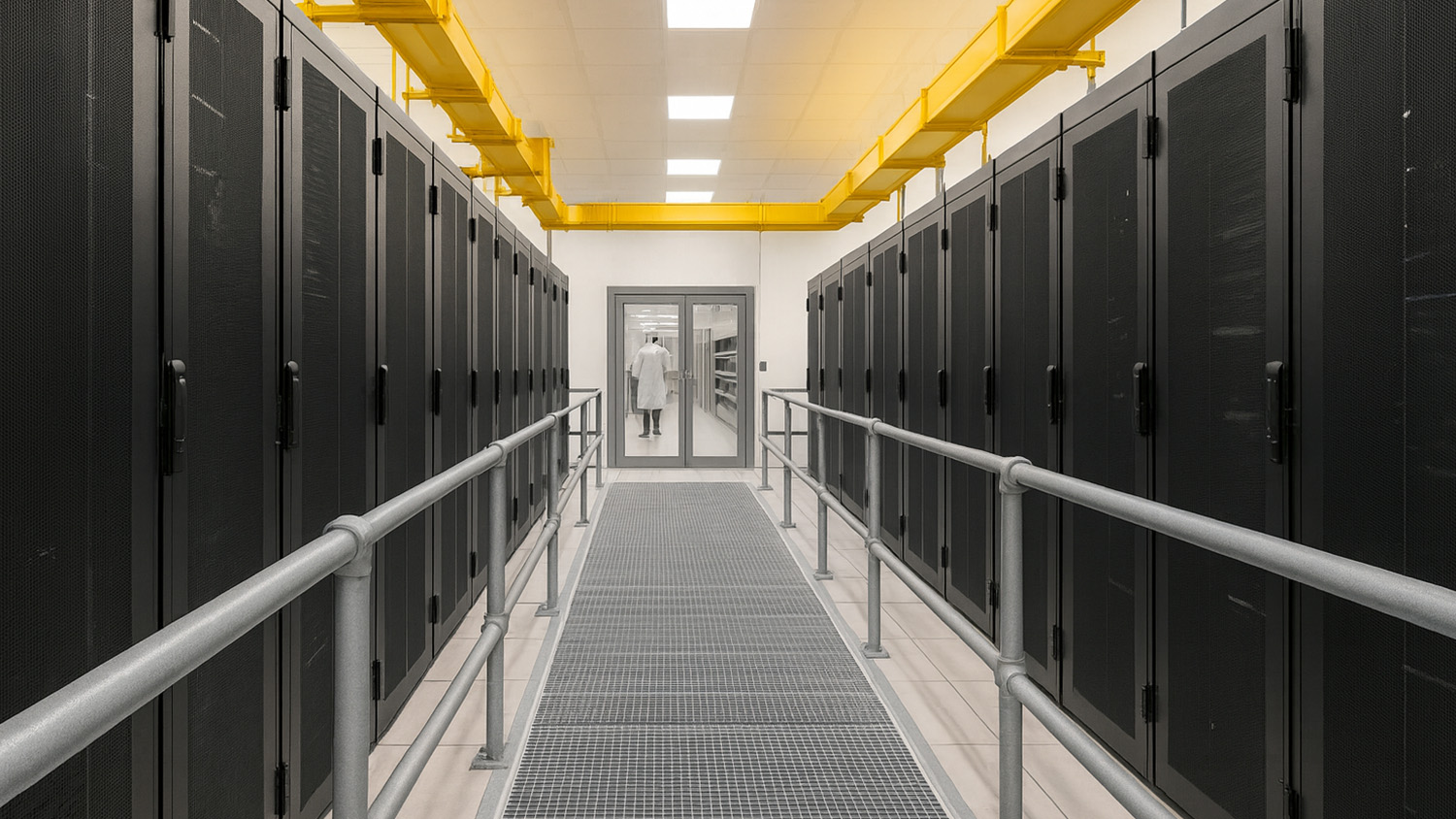
The telecoms and data centre sectors are beginning to adopt Glass Reinforced Plastic (GRP) for platforms, flooring, and cable management systems, marking a shift away from traditional metallic materials that have long dominated critical infrastructure. This move is being driven by the need to reduce electromagnetic interference, improve cooling efficiency, and meet ambitious carbon reduction targets.
For decades, steel and aluminium have been standard in access platforms, walkways, and raised flooring systems. However, in high-performance network environments, these materials can reflect or distort radio frequency signals, block airflow to cooling systems, and require maintenance regimes that increase operational costs and carbon emissions. GRP offers a non-metallic, corrosion-resistant alternative that addresses these issues directly.
In telecom installations, GRP’s non-conductive properties eliminate electromagnetic interference, allowing antennas, switches, and network equipment to operate without performance loss. Its structural strength meets telecom load requirements without the need for earthing, reducing installation complexity and ongoing inspection demands. This is particularly important for rooftop and mast installations where access is difficult and installation time must be minimised.
In data centre environments, GRP is proving valuable for both new builds and retrofits. Open-mesh GRP flooring improves cooling airflow, reducing the energy needed for mechanical cooling and supporting uptime-critical temperature stability. Its corrosion resistance eliminates the repainting and repair cycles associated with steel, cutting maintenance emissions and reducing total cost of ownership by as much as 40 percent over a 50-year lifespan. The lighter weight of GRP compared to steel also enables faster installation with minimal disruption to live facilities.
From a sustainability perspective, GRP supports environmental goals by offering lower embodied carbon in production than many traditional metals. When combined with its long service life and minimal maintenance requirements, the lifecycle carbon savings can be substantial. These advantages contribute positively to green building certifications such as BREEAM and LEED, making GRP an attractive option for operators aiming for high sustainability ratings.
Early adoption projects are already demonstrating the material’s versatility. GRP platforms have been installed in high-density telecom sites to maintain signal integrity, while data centres have
begun incorporating GRP walkways and access structures to improve airflow and reduce operational costs. In both cases, the installations have met stringent load, safety, and compliance requirements without introducing the performance compromises associated with metallic alternatives.
As the telecoms and data industries continue to scale to meet global connectivity and cloud computing demands, the adoption of materials that support both technical performance and sustainability will be essential. GRP’s combination of structural reliability, environmental performance, and operational efficiency positions it as a credible and forward-looking alternative to traditional metals in this sector.
Further technical information and application case studies are available from Engineered Composites, the UK’s largest independent supplier of GRP products for industrial and infrastructure markets.