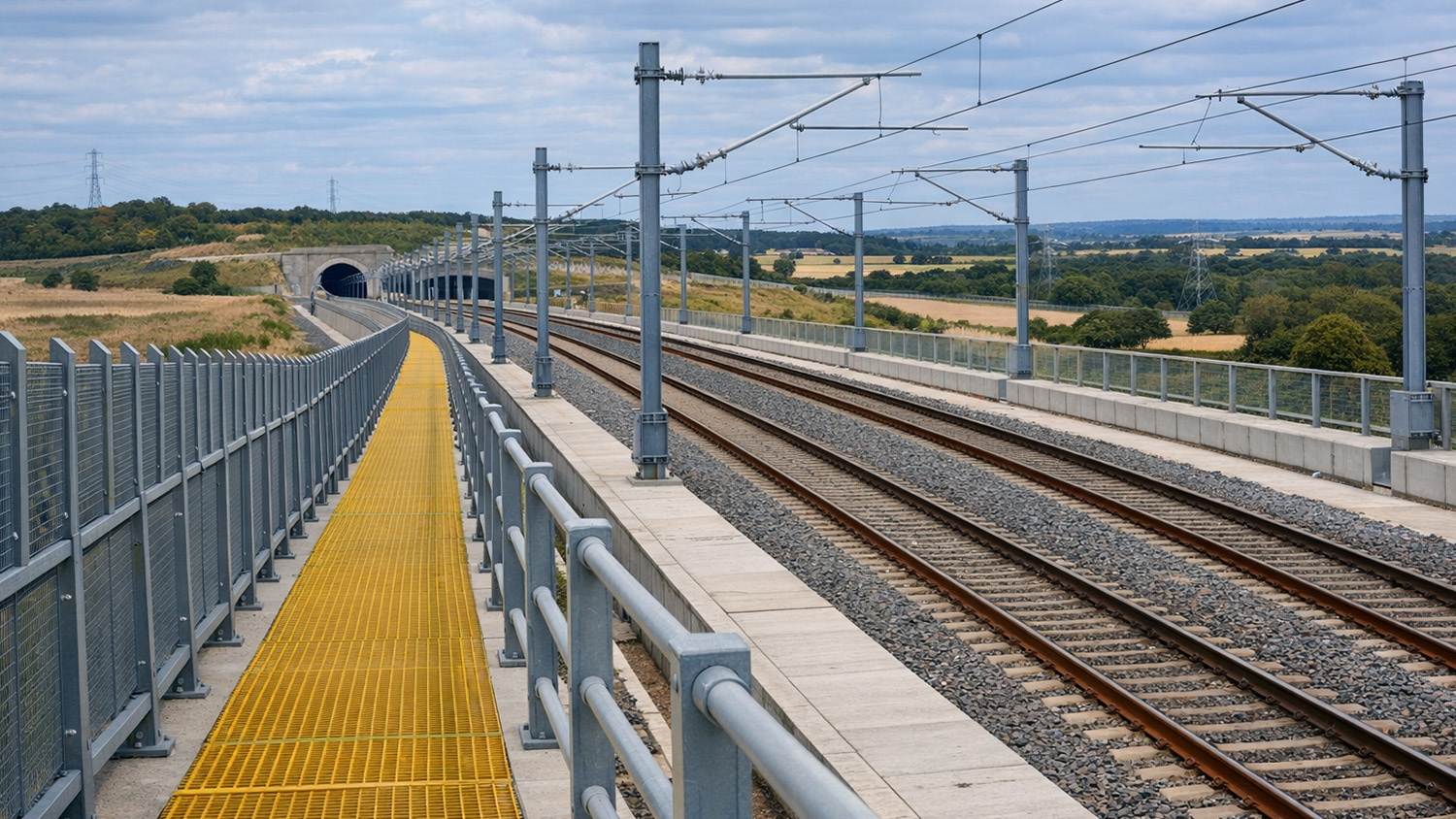
As construction progresses on High Speed 2, the UK’s largest rail infrastructure programme, attention is increasingly turning from short-term build considerations to long-term performance and cost. Designed to operate for more than 100 years, HS2 presents a scale and lifespan that exposes the limitations of traditional material choices, particularly in electrified and high-maintenance environments.
The route includes extensive tunnelling, major viaducts, fully electrified corridors and complex station environments, all of which demand materials that can perform reliably over decades with minimal intervention. In these conditions, durability, electrical safety and lifecycle cost are becoming as important as initial capital expenditure.
Across HS2, Glass Reinforced Plastic is being specified in targeted applications where steel has historically introduced long-term cost and risk. In 25kV electrified environments, non-conductive GRP systems remove the electrical hazards associated with steel while also eliminating corrosion. This reduces the need for earthing, inspection and ongoing protective treatments, all of which add cost over the life of a rail asset.
Perimeter fencing is one area where the cost impact is particularly clear. Steel palisade fencing, while familiar, requires regular inspection, corrosion management and eventual replacement, especially in exposed or poorly drained locations. GRP palisade and mesh fencing systems offer a maintenance-free alternative, avoiding repainting, rust treatment and component replacement. When deployed over hundreds of kilometres, the reduction in labour, access planning and possession time represents a significant whole-life cost saving.
Within reinforced concrete structures, GRP rebar is being applied in environments where steel corrosion would otherwise drive long-term maintenance and repair. In tunnels, drainage zones, signalling foundations and wetland areas, steel reinforcement is vulnerable to moisture and chlorides, leading to cracking, spalling and structural remediation. GRP rebar does not corrode and remains unaffected by aggressive ground conditions, allowing concrete structures to maintain integrity without future repair programmes. Its non-magnetic and non-conductive properties also reduce the risk of interference with signalling and communications systems, avoiding costly mitigation measures later in the asset’s life.
GRP is also being used in access infrastructure across HS2, including structural profiles, walkways, flooring systems and handrails on viaducts, in tunnels and within station environments. These elements are essential for inspection and maintenance throughout the railway’s operational life. Lightweight, corrosion-resistant GRP systems reduce dead load on structures and simplify installation, while their long-term durability removes the need for frequent inspection and replacement. In locations where access is difficult or disruptive, reducing future intervention has a direct impact on operational cost and safety.
Taken together, these applications reflect a broader move towards performance-led specification on HS2. Rather than selecting materials based on familiarity or lowest upfront cost, engineers are increasingly assessing how materials behave over decades of service. Reduced maintenance, fewer possessions, improved electrical safety and lower replacement rates all contribute to a more predictable and lower total cost of ownership.
As HS2 continues to set benchmarks for future rail development in the UK, the use of composite materials highlights how long-term safety, durability and cost efficiency can be addressed through informed material selection. The lessons emerging from HS2 are likely to influence how future rail and infrastructure projects approach whole-life design.
Engineered Composites, a UK supplier of GRP solutions, has been supporting rail and infrastructure projects for more than 38 years, providing GRP fencing systems, rebar, structural profiles, grating and access solutions manufactured to recognised standards and supported by technical expertise.