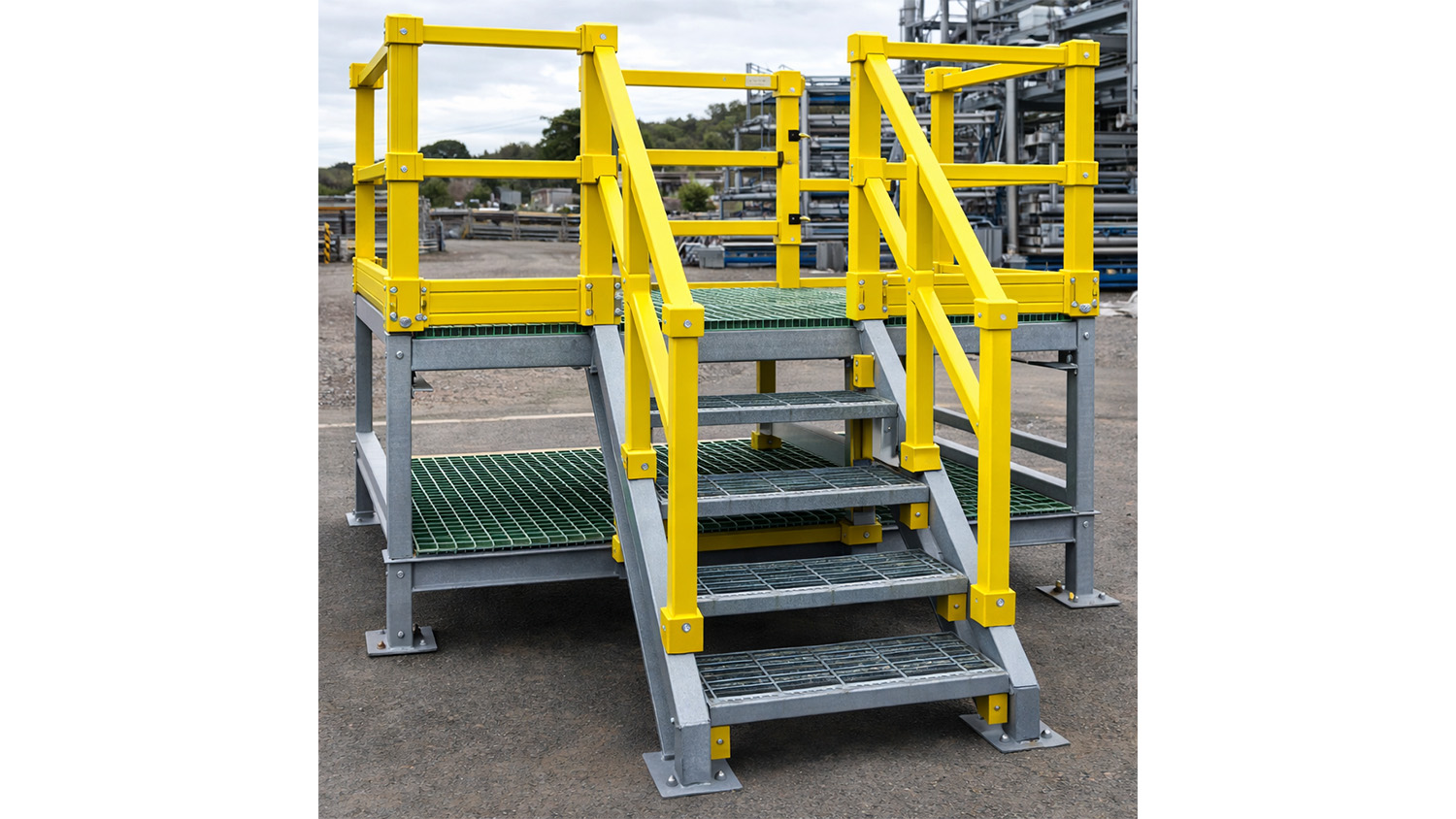
A new modular GRP handrail system entering the UK market highlights the accelerating shift away from traditional steel safety barriers towards composite materials in modern infrastructure projects. The ENGRAIL 51mm Box Section Modular Handrail System has been developed to address growing demand for durable, corrosion resistant safety barriers in sectors including rail, energy, utilities, marine infrastructure, and industrial construction.
Safety barriers and access protection systems are critical components across infrastructure environments, yet conventional steel handrails frequently require ongoing maintenance due to corrosion, particularly in coastal, chemical, and high humidity conditions. GRP, or Glass Reinforced Plastic, has emerged as a practical alternative due to its inherent resistance to corrosion, moisture, and chemical exposure, while also offering a significantly lighter structural profile.
The ENGRAIL system utilises pultruded GRP box section profiles to provide high structural strength while maintaining the lightweight characteristics associated with composite materials. This combination enables faster installation and reduces handling complexity on site, particularly in constrained environments such as elevated platforms, rooftops, and rail infrastructure corridors.
Structural Performance Designed for Safety Compliance
Independent structural testing of the system demonstrates a load capacity of 1.657 kN per metre at 25mm deflection, with full elastic recovery under load, meaning the structure returns to its original shape after stress is removed.
These performance characteristics allow GRP handrail systems to meet demanding safety requirements for industrial and infrastructure applications, where barrier systems must maintain structural integrity under repeated loading.
The use of pultruded GRP profiles also ensures consistent mechanical performance throughout the system, providing reliable strength while reducing overall structural weight compared with steel alternatives.
The Growing Role of GRP in Infrastructure
Across the construction and infrastructure sectors, composite materials are increasingly being specified as engineers and asset owners seek to reduce maintenance requirements and extend infrastructure lifespan. GRP components typically provide service lives exceeding 50 years in harsh environments while maintaining structural performance without the need for repainting, galvanising, or corrosion treatment.
These advantages are particularly relevant for sectors where electrical safety and environmental exposure present additional challenges. GRP materials are non conductive and non magnetic, making them suitable for use near electrified rail infrastructure, substations, and sensitive electronic equipment.
Supporting Long Term Asset Performance
The introduction of new GRP safety systems reflects wider industry trends towards materials that support lower lifecycle costs and more sustainable infrastructure. Lightweight composite systems can reduce installation times and simplify logistics, while corrosion resistant materials reduce long term maintenance demands for asset operators.
As infrastructure owners place increasing emphasis on whole life asset performance, materials such as GRP are expected to play an expanding role in safety systems, structural components, and access infrastructure across the built environment.
UK Composite Manufacturing Capability
The ENGRAIL system has been developed by UK composite manufacturer Engineered Composites, which has supplied GRP systems to infrastructure and industrial sectors for nearly four decades. The company’s product range includes GRP pultruded profiles, grating systems, fencing, structural components, and safety infrastructure used across rail, utilities, energy, marine, and construction projects.
The launch reflects ongoing innovation within the UK composites sector as engineers increasingly explore alternatives to traditional materials in order to improve safety performance, durability, and long term sustainability in infrastructure design.