The type of vacuum technology you choose has a direct impact on the efficiency of your process. Outdated technology, or a vacuum pump design that is not well matched to the application, can lead to higher energy consumption, accelerated wear, and reduced reliability. By selecting the right vacuum technology for the process, operators can achieve better performance and improved overall efficiency.
Aligning your equipment strategy with proven, modern technologies helps ensure long-term operational and financial resilience. The following sections outline how choosing or upgrading to the right technology ultimately leads to significant reductions in the total cost-of-ownership of your vacuum system.
How your choice of vacuum pump technology affects efficiency
A vacuum pump may be able to achieve the required process conditions, but that does not necessarily make it the most efficient option. There are often multiple vacuum pump technologies available that can reach the desired vacuum level (for example, rotary vane, dry claw, dry screw or liquid ring vacuum pumps), but each will operate at a different efficiency level at the duty point. Beyond energy efficiency, there are several other factors to consider when identifying which vacuum technology is most suited to the application.
Key factors to consider:
• Operating pressure/vacuum range
Each vacuum pump technology performs best at a specific pressure range. Choose a vacuum pump that operates efficiently across your required range.
• Variability of vacuum demand
Vacuum processes that are continuous and stable require different solutions to those that are intermittent and with variable demand. Technologies that can be fitted with a variable speed drive (VSD) can adapt to these changes, preventing energy from being wasted.
• Contamination and corrosion resistance
Processes with condensable vapors and aggressive chemicals require vacuum pumps that are specifically resistant to contamination and corrosion. Consider factors like material compatibility and process gas handling to prevent corrosion and ensure reliable performance.
• Maintenance requirements
In applications where downtime is costly, technologies with reduced maintenance requirements or straightforward field serviceability could help.
• Physical constraints
Sound pressure levels, heat rejection, and footprint may influence vacuum pump selection, especially in space-limited or noise-sensitive environments. Consider whether a central vacuum system could better match operational needs.
How vacuum pumps are designed to be efficient
A vacuum pump’s design directly influences how efficiently and reliably it can perform in specific applications.
Here are some of the ways vacuum pumps are engineered with efficiency in mind:
• Optimized compression chamber and internal geometry
Precision rotor profiles and tuned flow paths reduce internal leakage (slip) and turbulence losses. This results in higher volumetric efficiency and requires lower motor power for the same pumping speed.
• Thermal management and cooling airflow
Efficient cooling systems, such as jackets or directed airflow channels, maintain stable operating temperatures. This stabilizes performance across duty cycles, preserves oil properties, and reduces the thermal stresses that accelerate wear.
• Materials and functional coatings
Wear-resistant alloys and engineered coatings reduce abrasion and corrosion. These surface technologies help maintain dimensional accuracy and performance.
• Service-friendly construction
A service-friendly construction can shorten the time taken to complete maintenance activities, reducing downtime.
• Filtration
Filtration should effectively capture particulates or oil mist and resist clogging, while simultaneously maintaining a low drop in pressure. This ensures both vacuum performance and system reliability.
Advances in motor technology for further efficiency gains
Advances in motor technology offer another practical route to improved efficiency and reduced running costs.
Here is how the latest motors can help to improve efficiency:
• Energy efficiency classes
International efficiency classes indicate how effectively a motor converts electrical input to mechanical output. Upgrading from older classes to later classes (for example, from IE1 to IE5) reduces losses and can substantially decrease energy consumption.
• Compatibility with variable speed drive operation
Some motors are compatible with variable speed drive operation and can power a vacuum pump within a specific range without overheating. These motors can be retrofitted with low cost and disruption.
• Reliability and maintenance advantages
Modern motor designs use improved materials, high-grade insulation, and optimized bearing arrangements to extend service life.
Benefits of optimizing or upgrading your vacuum technology
Choosing or upgrading to optimized vacuum pump and motor technology can deliver significant reductions in the total cost-of-ownership of your vacuum supply, whilst also improving reliability and process quality.
Typical benefits include:
• Energy savings
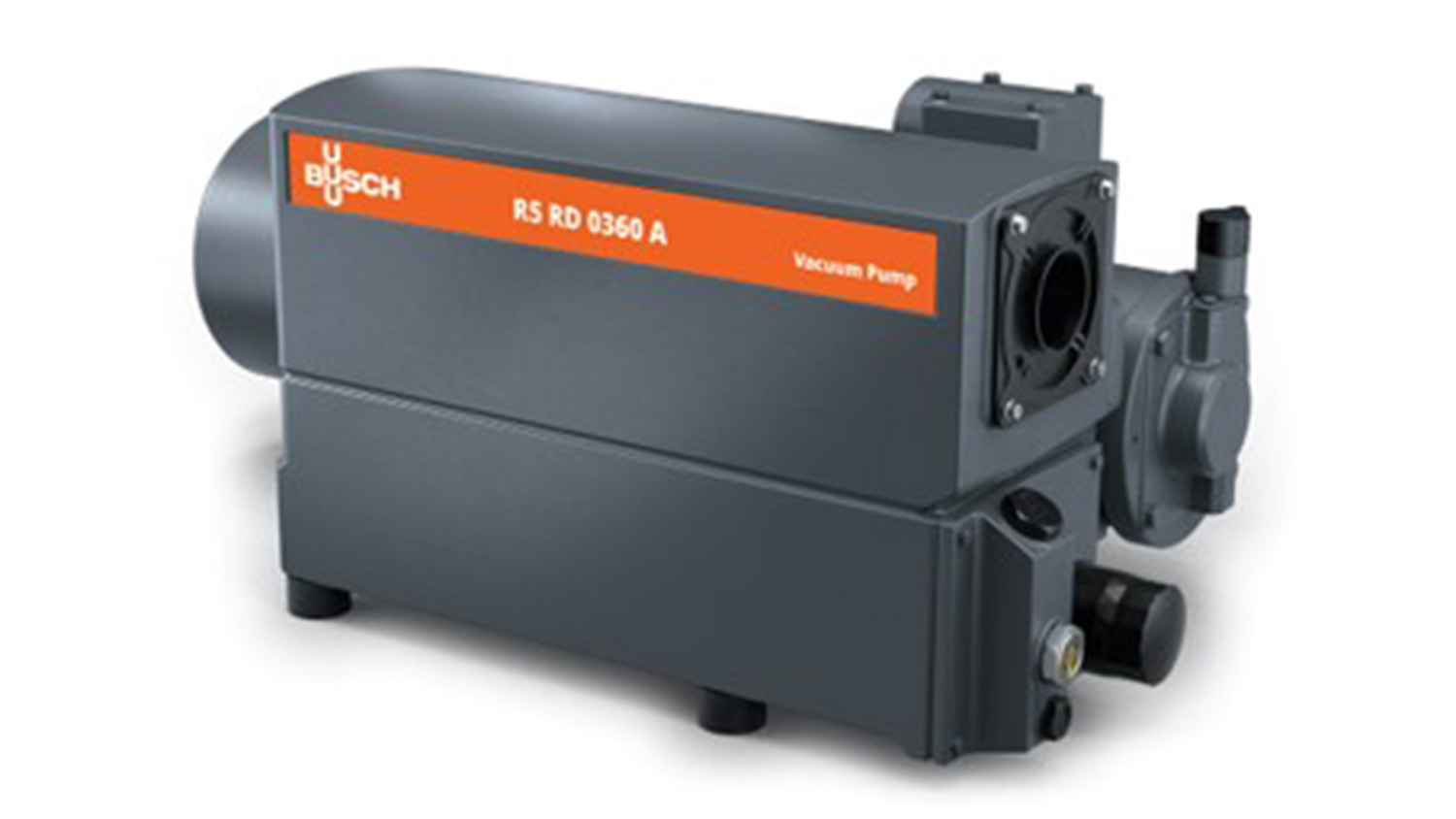
The latest efficiency-optimized vacuum pump designs, combined with high-efficiency motors, can significantly cut energy consumption. For example, single-stage rotary vane vacuum pumps (e.g. the Busch RD range) achieve energy consumption reductions of up to 30% compared with conventional rotary vane pumps. Likewise, scroll vacuum pumps (e.g. the Pfeiffer HiScroll series) can reduce energy consumption by up to 50 % compared with other rough vacuum pump technologies.
• Reduced downtime and longer life
Improved designs, enhanced thermal management, and materials engineered for durability reduce wear. Such improvements maximize reliability, lower the frequency of emergency repairs, make maintenance costs more predictable, and extend the life of your vacuum pump.
• Improved process stability and product quality
Consistent vacuum performance can reduce process variation, decrease reject rates and increase throughput.
• Compliance and sustainability
Reducing energy consumption lowers carbon emissions and supports regulatory or corporate sustainability goals.
Summary
When it comes to choosing the optimal vacuum technology for your process, every choice – from vacuum pump design to motor technology – directly affects energy consumption, maintenance requirements, and overall system reliability. Making an informed choice can reduce energy consumption, downtime, and the total cost-of-ownership, while supporting sustainability objectives.
Beyond environmental considerations, energy efficiency has direct economic implications: an energy-optimized vacuum concept can achieve payback within a short operating period, while higher operating costs of lower-priced alternatives can soon outweigh the initial investment advantage. Assessing the strengths of each vacuum technology, supported by vacuum experts, ensures that the gains from upgrading far outweigh the initial investment cost. Aligning your equipment strategy with proven, modern technologies is a step toward long-term operational and financial resilience.
Website: www.buschvacuum.com